What affects the cost of furniture removal
Two wardrobes can look identical in a photo and take very different amounts of work to get out of a house. This guide explains what goes into the price of a furniture collection, so you understand the figure you are quoted and how to keep it down.
Key points
- The number of pieces and the size of each one set the baseline, because they decide how much van space and how many trips to the door are needed.
- Weight matters more than size: solid timber takes two people and time, while an empty flat-pack carcass is light and quick.
- Furniture that has to be taken apart in the room adds labour, and fitted units screwed to the wall add the most.
- Which floor the furniture is on, whether there is a lift, and how far the van can park from the door all change the time on site.
- A fixed price from a photo covers everything in one figure, with nothing added when the crew arrives.
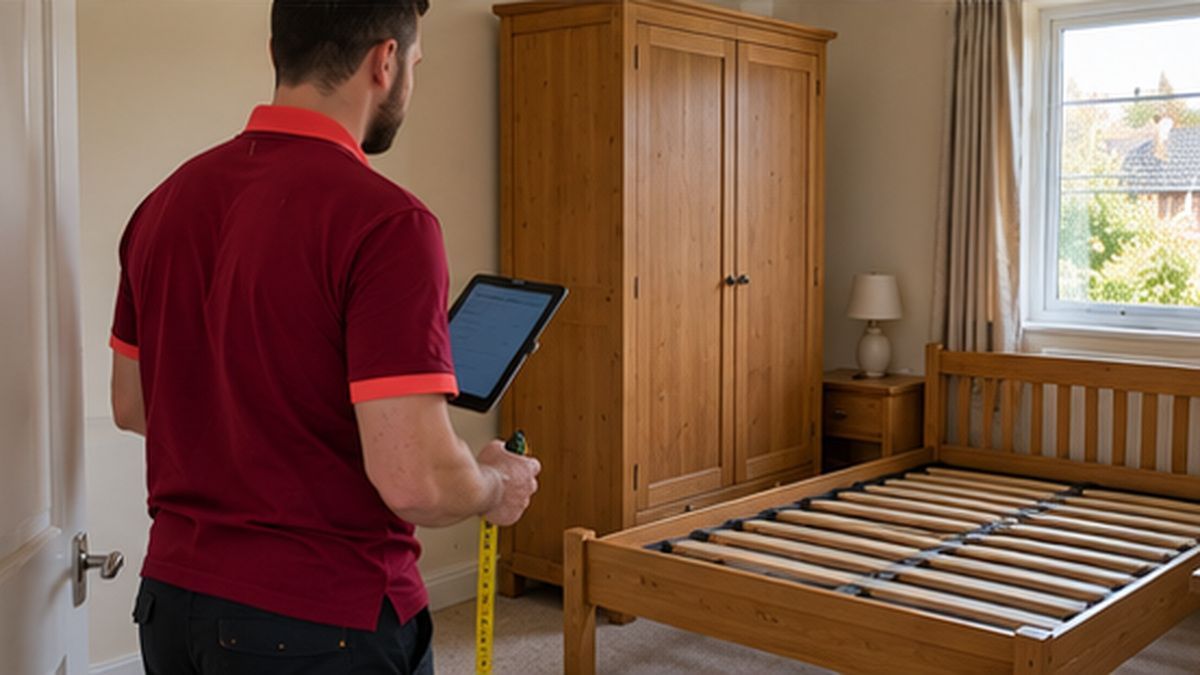
How many pieces, and how big they are
The first thing any carrier looks at is how much furniture there is. One chest of drawers is a short visit. A whole bedroom, with a wardrobe, a bed frame, two bedside cabinets and a dressing table, is a longer visit and fills a larger share of the van. Both of those things are reflected in the price, because the van has a finite capacity and the crew's time is the main cost of the job.
Size counts as well as quantity. A single triple wardrobe can take up as much room on the van as a dining table and six chairs, and it takes more handling to get through a door. When you send a photo, include everything you want gone and stand back far enough that the scale is clear. A photo with a door frame or a person in it tells us far more about size than a close-up of a drawer front.
It is nearly always better value to have several pieces collected in one visit than to book them one at a time. The travel and the set-up happen once, and the extra items only add loading time. If a second piece is on the edge of going, say so when you ask, and we will price it both ways. Our furniture disposal page covers mixed loads and whole rooms.
Weight: solid timber against flat-pack
Weight has more effect on the work than size does. An oak sideboard, a mahogany wardrobe or a cast iron bed frame needs two people for every lift, slows the carry on the stairs and has to be handled carefully to avoid damaging the house. An empty flat-pack unit of the same dimensions can often be walked out by one person and lifted onto the van by two in a few seconds.
That is why the photo matters. We can usually tell solid timber from veneered board by the grain, the edges and the way the piece is built, and we can see whether a bed frame is tubular steel or heavy iron. If you know what the furniture is made of, tell us. A line saying the table is solid oak and weighs a ton is more useful than any measurement.
Weight also decides what happens to the piece afterwards. The guide to what happens to your furniture after collection goes through each material in turn.
Want one price with nothing added?
Send a photo of the furniture with a line about the floor, the stairs and where the van can park, and we reply with a single fixed price for the whole job.
Taking it apart in the room
Some furniture comes out of a room in one piece. Some has to be dismantled first, either because it will not fit through the door or round the stairs, or because it is fixed to the building. Dismantling takes time and tools, and that time is part of the price. A freestanding wardrobe that needs its doors off is quick. A flat-pack wardrobe that needs its cam locks undone and its panels stacked takes longer. A fitted run that is screwed to the walls and the ceiling, with shared panels between the carcasses, takes the longest of all.
Bed frames, bunk beds and large dining tables usually come apart at a few bolts, which is routine. Fitted wardrobes, built-in shelving and office desks with cable trays need more work. If you can see fixings into the wall in the photo, point them out.
You can reduce this part of the price by doing some of it yourself before the crew arrives: emptying drawers, taking doors off, unbolting a bed frame. You do not have to, but a wardrobe that has already been emptied and stripped of its doors is a quicker job and is priced as one. See how to get a wardrobe down the stairs for what is realistic to do alone.
Which floor, and whether there is a lift
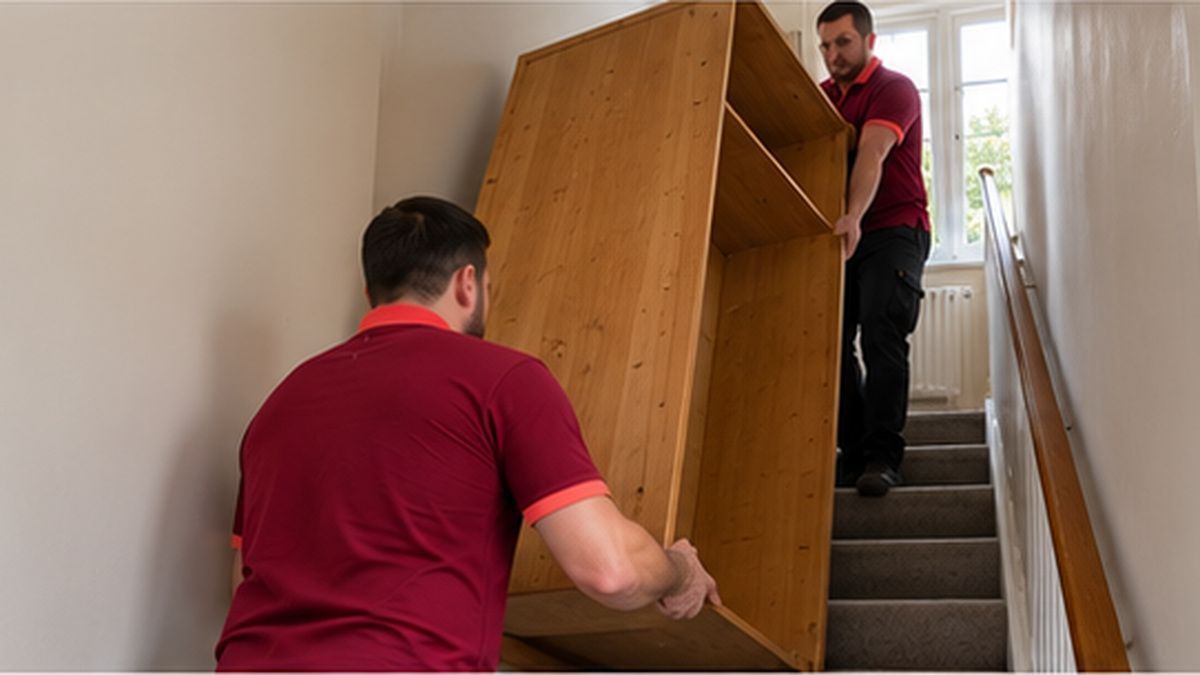
A ground floor room with a door to the drive is the easiest collection there is. Every flight of stairs between the furniture and the van adds carrying time, and a staircase with a turn adds more, because heavy pieces have to be pivoted on the landing or dismantled at the top. A bedroom wardrobe on the first floor of a house is normal. The same wardrobe on the fourth floor of a block without a lift is a different job.
A lift helps, but only if the furniture fits in it. A domestic chest of drawers goes in most lifts. A wardrobe carcass or a double bed base often does not, and then it either comes apart or goes down the stairwell. Tell us the floor, whether there is a lift, and roughly how big the lift is if you know, and we price for the route the crew will actually take rather than finding out on the day.
Flats also bring communal doors, entry systems and shared hallways. If the building needs a key fob or a concierge to open the loading door, let us know in advance. The bed frame removal page explains how divans, slatted frames and bunk beds come out of upstairs rooms.
The walk to the van and parking
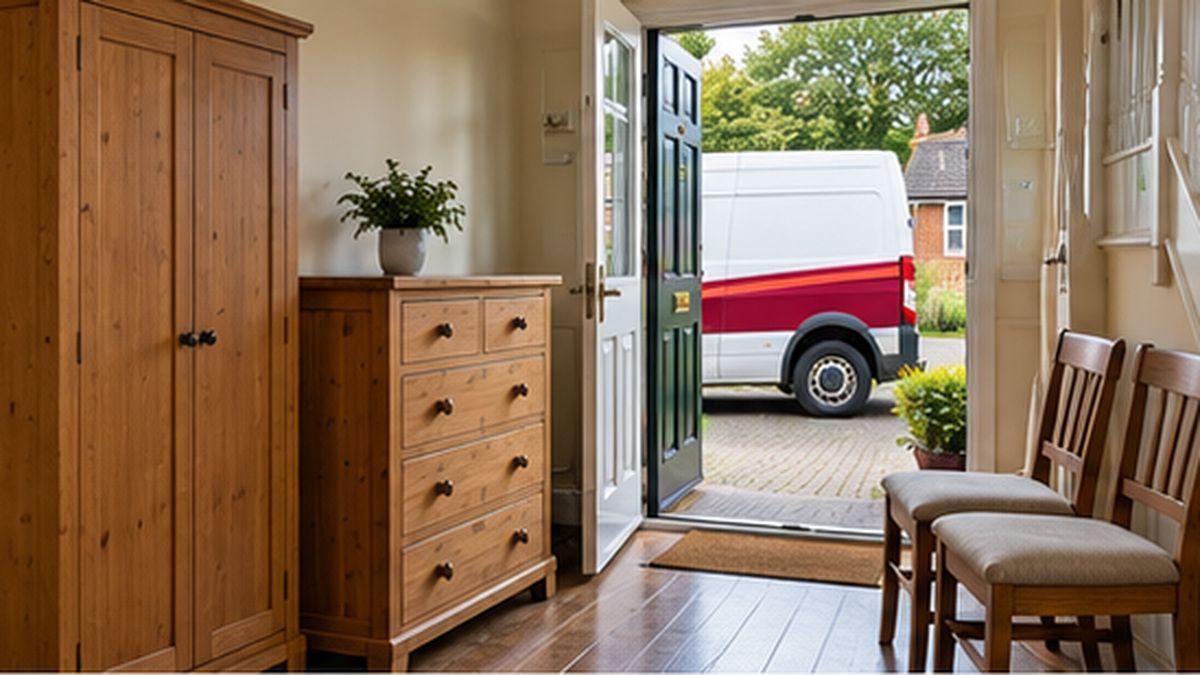
Once the furniture is out of the building, it still has to reach the van. A drive or a space directly outside the door means a few steps. A long garden path, a shared courtyard or a block set back from the road means the crew carries every piece further, and on a large load that distance is walked many times. When you describe the job, say where the van can stop and how far it is from there to the door.
Parking itself can add to the cost. Permit-only streets, loading bays with time limits and residents' bays all affect how long the van can stay and whether a ticket has to be bought. If you have a visitor permit or a space on a private drive that the crew can use, that removes the uncertainty. A side gate that is too narrow, a path with steps or a locked communal gate all slow the carry too, and on a whole house clearance those minutes add up.
Same-day against a booked date
We offer same-day or next-day collection wherever we can fit it in, and in most cases that does not change the price. What it does change is availability. A photo sent early in the morning gives us the best chance of routing a van past you that day, and a collection that can be slotted in alongside others nearby is easier to offer quickly than one that needs a dedicated trip.
If you have flexibility on the date, say so. A job that can be done any day that week lets us combine it with other collections in the area. If it has to be a particular day because tenants are moving in, tell us and we will confirm whether we can hold that slot before you commit. Council bulky waste collections work the other way round: a fixed date some way off, and the furniture left outside for the crew. Either way, payment is made once the furniture is on the van, at the figure you were quoted from the photo.
How a fixed price from a photo works
Everything above feeds into one number. You send a photo through the form on this page, add a few words about the floor, the stairs, the lift and where the van can park, and we reply by email with a fixed price for the whole job: the taking apart, the carrying, the loading and the disposal at a licensed waste transfer station. There is no hourly rate, no charge per flight of stairs and no list of extras, so the figure you get back is the figure you pay.
Because the price is fixed before anyone arrives, the detail you give matters. A photo that shows the whole piece, a note about anything screwed to the wall and an honest description of the route out mean the quote is right first time. If something turns out to be different on the day, we talk to you before doing anything.
We are an upper tier waste carrier registered with the Environment Agency, licence CBDU526130, and a waste transfer note is available on request. Having done 500+ collections over 15+ years, we have priced most situations before, and the Google rating of 5 stars reflects how often the figure we send is the figure people pay. To compare routes before deciding, how to get rid of old furniture sets them out, and can furniture go in a skip looks at the skip alternative.
Questions people ask
Why does furniture removal cost more from a flat than a house?
Stairs, lifts that are too small for a wardrobe, communal doors and a longer walk to the van all add time for the crew. The furniture is the same; the route out is longer and slower, and the price reflects the time rather than the item.
Is it cheaper if I take the furniture apart myself?
It can be, because the crew spends less time in the room. Emptying drawers, taking doors off and unbolting a bed frame are all safe to do yourself. Leave fitted wardrobes and anything with glass to the crew.
Does same-day collection cost extra?
Not as a rule. Same-day or next-day collection is offered wherever we can fit it in, and the price is based on the furniture and the access, not on how soon you need it. What changes is whether a slot is available that day.
What if the furniture is different from the photo when you arrive?
The crew talks to you before doing anything. If there is an extra piece or a wardrobe turns out to be fitted rather than freestanding, we agree any change with you on the spot, and if you would rather not go ahead, nothing is charged.
Ready for your fixed price?
Fill in the form and we reply with one fixed price for collecting and disposing of the furniture. Then send us a photo so the price is right first time.
- Registered waste carrier
- Fixed price from a photo
- Two-person crew and van
- Same or next day where possible

Get a fixed price from a photo
Fill this in and we reply by email with a fixed price. Then send us a photo of the furniture so the price is right first time.
Sent.
No email app on this device? Send the photo to hello@furniture-removal.co.uk with your postcode.