Can furniture go in a skip?
Most furniture can go in a skip, but a skip is a blunt tool for a few pieces. Here is what skip firms will and will not take, how quickly furniture fills one, what the permit rules are if it has to sit on the road, and when a collection makes more sense.
Key points
- Wooden, metal and flat-pack furniture is accepted by almost every skip firm as general household waste.
- Upholstered seating is handled separately by many firms because of pollutant rules, so ask before you load it.
- Bulky furniture fills a skip far faster than its weight suggests unless you break it down first.
- A skip left on a public road needs a council permit, which the skip firm usually arranges for a fee.
- For one or two pieces, a two-person collection is often quicker and leaves nothing sitting on the drive.
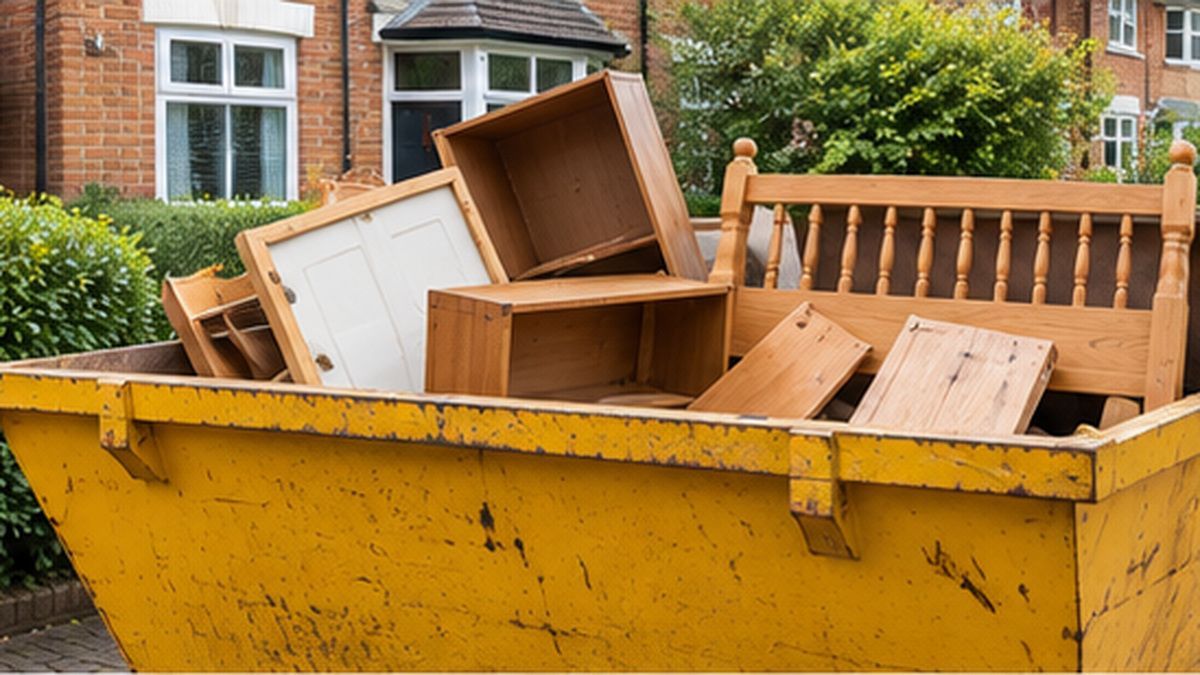
Can furniture go in a skip? What skip firms accept
In general, yes. Wardrobes, bed frames, tables, chairs, chests of drawers, bookcases, desks and garden furniture are all treated as ordinary household or mixed waste, and a skip firm will take them without a second thought. Solid wood, veneered board, flat-pack chipboard, metal frames and glass shelves can all go in together, because the skip is sorted when it reaches the waste transfer station.
The exceptions are the same ones that apply to any skip. Nothing hazardous, no gas bottles, no tyres, no paint tins that are still wet, no plasterboard mixed in with the rest, and nothing that comes under special disposal rules. Upholstered seating falls into that last group and has its own section below. If you are unsure about an item, ask the firm when you book rather than hoping it goes unnoticed, because a load that breaks the rules can be refused or charged extra when it is tipped.
Skip sizes and how much furniture fills one
Skips are measured in cubic yards, and the common household sizes run from a mini skip of a couple of yards through a midi skip of around four yards to a builder's skip of six or eight yards. Those numbers describe volume, and furniture is almost all volume. A double wardrobe standing upright takes up most of a mini skip on its own and leaves awkward gaps around it that nothing else fits into.
A rough picture helps. A midi skip swallows a dismantled wardrobe, a bed frame and a chest of drawers with some room left over, as long as everything is broken down and stacked flat. The same three pieces loaded whole will overflow it. A builder's skip is the size most people end up with when clearing a whole bedroom or an office, and even then the loading order matters: flat panels first, then frames, then the odd shapes on top.
Remember that the firm will not take a skip that is loaded above the rim, and tall furniture sticking out of the top is the usual reason a driver refuses to lift one. If the pieces will not go below the line, they have to come out again before the lorry can leave.
Only a few pieces to shift?
Skip the skip. Send a photo of the furniture and we reply with one fixed price to take it apart, carry it out and dispose of it, paid once it is loaded.
Breaking furniture down before it goes in
Taking furniture apart is the difference between a skip that holds three pieces and one that holds eight. Flat-pack comes apart with a screwdriver and an allen key, and the panels stack like boards. Older solid wood is held with glue, dowels and screws, and a claw hammer and a saw are often faster than trying to undo it neatly. Metal bed frames unbolt into rails and headboards that lie flat along the bottom.
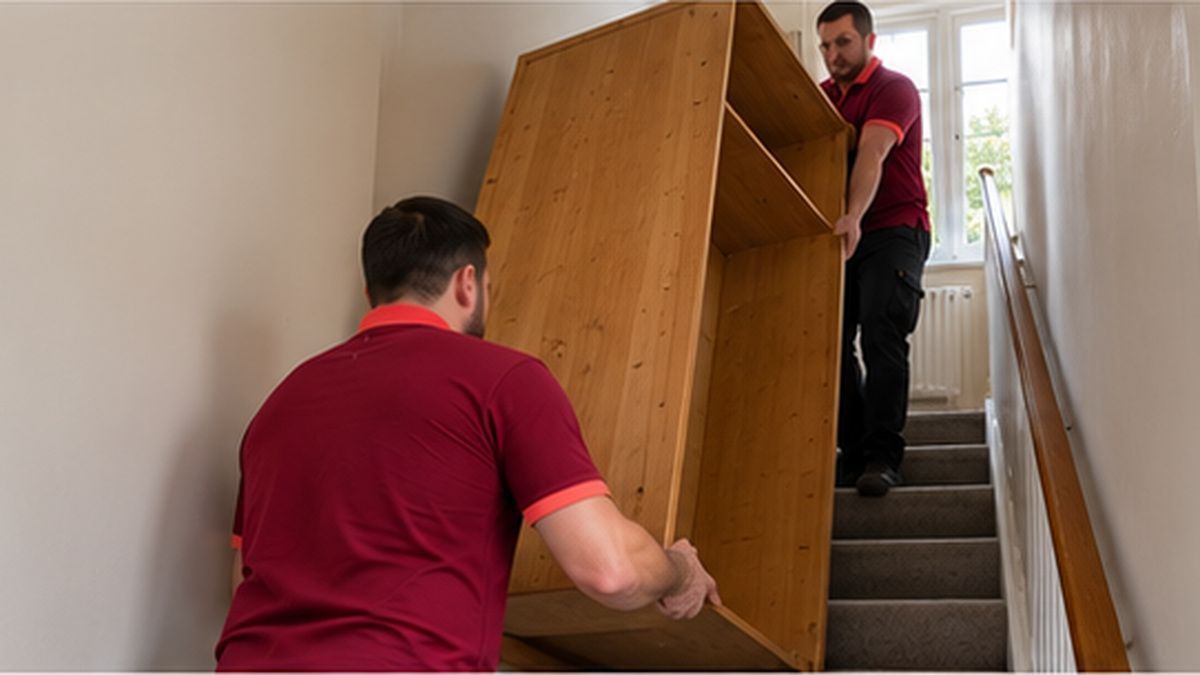
Allow more time than you expect, wear gloves, and take the glass out of any cabinet or table before you start swinging anything. If a piece is on an upper floor it is usually easier to dismantle it in the room and carry the parts down than to wrestle a whole wardrobe down the stairs. How to get a wardrobe down the stairs goes through that in detail. Keep the screws and fittings in a bag rather than loose in the skip, because small metal in a mixed load is one of the things that gets lost at the sorting stage.
Skip permits if it has to sit on the road
A skip on your own drive or front garden needs no permission. A skip on a public road, including the road outside your house, needs a permit from the council, and in most areas the skip firm applies for it on your behalf and adds the cost to your hire. Permits run for a set number of days and have to be renewed if the skip stays longer, and some councils also require cones, lights or reflective markings on a skip left on the highway overnight.
If you live in a flat or a terraced street with no off-road space, the permit is unavoidable, and in controlled parking zones you may also need the bay suspended. The paperwork is not difficult, but it adds a few days to the lead time and it is one more reason a skip suits a full clearance better than a single wardrobe. Check with the firm what the permit covers and how long you have before the skip needs collecting.
Upholstered furniture and pollutant rules
Upholstered seating in the UK is now treated differently from other furniture because the foam and fabric may contain persistent organic pollutants, usually shortened to POPs. Waste sites have to keep this seating out of landfill and send it for incineration with energy recovery, which means it cannot simply be mixed into a general skip in the way a wooden table can. The rules apply to armchairs, padded dining chairs, footstools, upholstered headboards and office chairs with padded seats and backs.
What this means in practice varies from firm to firm. Some will take upholstered items in a mixed skip and sort them at the transfer station, some ask you to keep them out altogether, and some charge a separate rate. Ask before you book and describe exactly what you have. If the firm will not take it, a chairs collection or a office furniture collection handles the upholstered pieces under the right rules while the rest goes in the skip.
A skip or a collection: which costs less
A skip is priced by size and hire period, plus the permit if you need one, and the figure is the same whether you fill it or not. For a whole house clearance, a renovation or a run of rooms being emptied at once, that flat rate is good value and the skip sits there while you work through it. For a wardrobe, a bed frame and a chest of drawers it rarely is, because you pay for air, you do all the dismantling and carrying, and the skip can block the drive for a week.
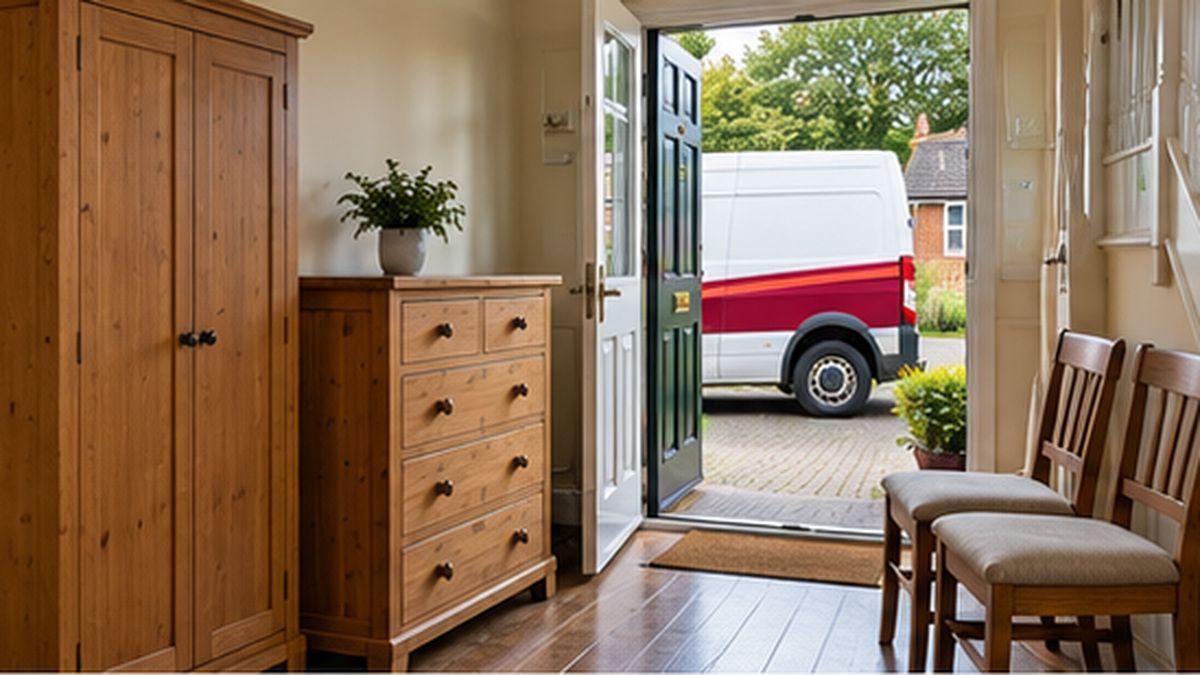
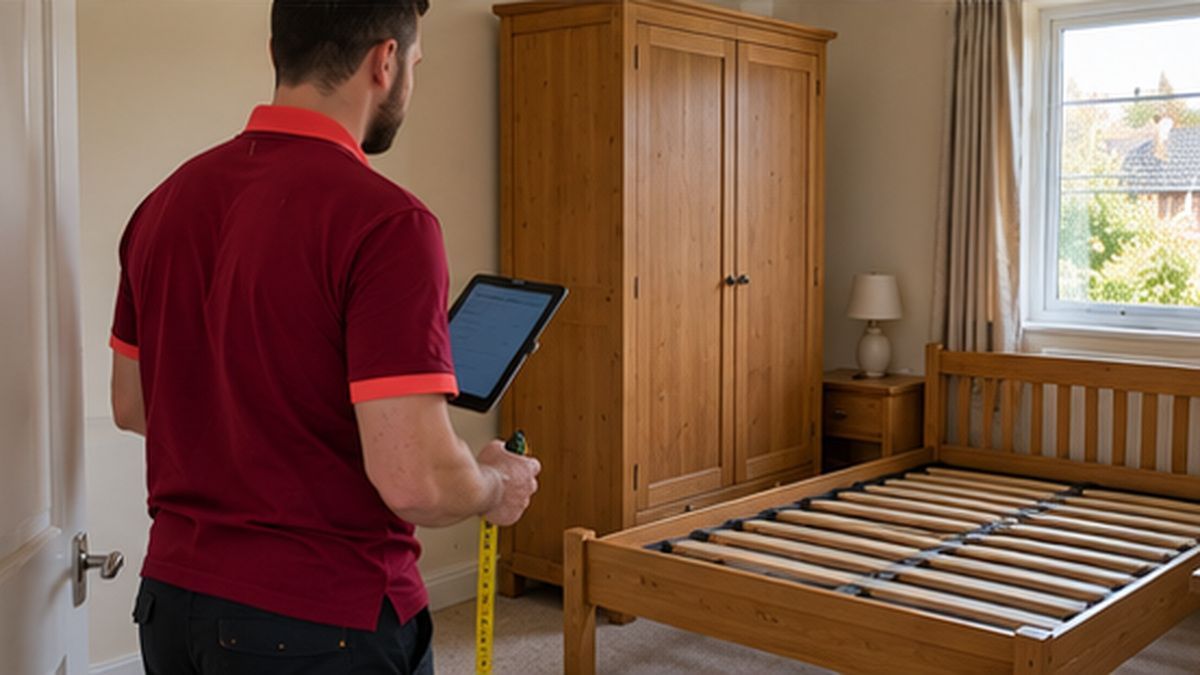
A collection is priced on the furniture itself. You send a photo, we send back one fixed figure that covers two people, the taking apart in the room, the carrying out and the disposal, and you pay once it is on the van. Nothing sits outside, nobody has to lift anything, and same-day or next-day is offered where we can manage it. The pieces still end up at a licensed waste transfer station, where the wood, metal and glass are separated for recovery, as what happens to your furniture after collection explains. How to get rid of old furniture puts the skip alongside every other route, and what affects the cost of furniture removal covers the pricing side if you want to compare properly.
Questions people ask
Can a whole wardrobe go in a skip without being taken apart?
It can, but it will take up most of a small skip on its own and the driver may refuse to lift a skip with a wardrobe poking above the rim. Taking the doors and back off first makes a big difference to how much else fits.
Can I put garden furniture in a skip?
Yes. Wooden benches, metal patio sets, rattan and parasols are all accepted as general waste. Fold or dismantle the larger pieces so they lie flat, and keep any glass table tops out until the heavier items are loaded underneath.
Do I need a permit for a skip on my own drive?
No. Permits are only needed when the skip stands on a public road or pavement. The firm normally applies for it, adds the cost to the hire and tells you how many days it covers.
Is a collection cheaper than a skip for one or two items?
Usually, yes. A skip is charged by size whether it is full or not, while a collection is priced on the pieces you have. For a bedroom's worth of furniture or more, the skip starts to make sense.
Rather not hire a skip?
Fill in the form with the pieces you need to clear and we reply with one fixed price that covers the lifting and the disposal. Then send us a photo so the price is right first time.
- Registered waste carrier
- Fixed price from a photo
- Two-person crew and van
- Same or next day where possible

Get a fixed price from a photo
Fill this in and we reply by email with a fixed price. Then send us a photo of the furniture so the price is right first time.
Sent.
No email app on this device? Send the photo to hello@furniture-removal.co.uk with your postcode.