How to get a wardrobe down the stairs
A wardrobe is the piece of furniture most likely to get stuck between the bedroom and the front door. This guide takes you through measuring, emptying, stripping it down and carrying it, and tells you when to stop and let someone else do it.
Key points
- Measure the narrowest point of the staircase and the turn at the top or bottom before you lift anything.
- Empty the wardrobe completely and take the doors and any loose shelves off, which removes most of the weight and all of the swing.
- A flat-pack wardrobe is usually quicker to unscrew than to carry; a solid timber one is often better carried whole with the doors off.
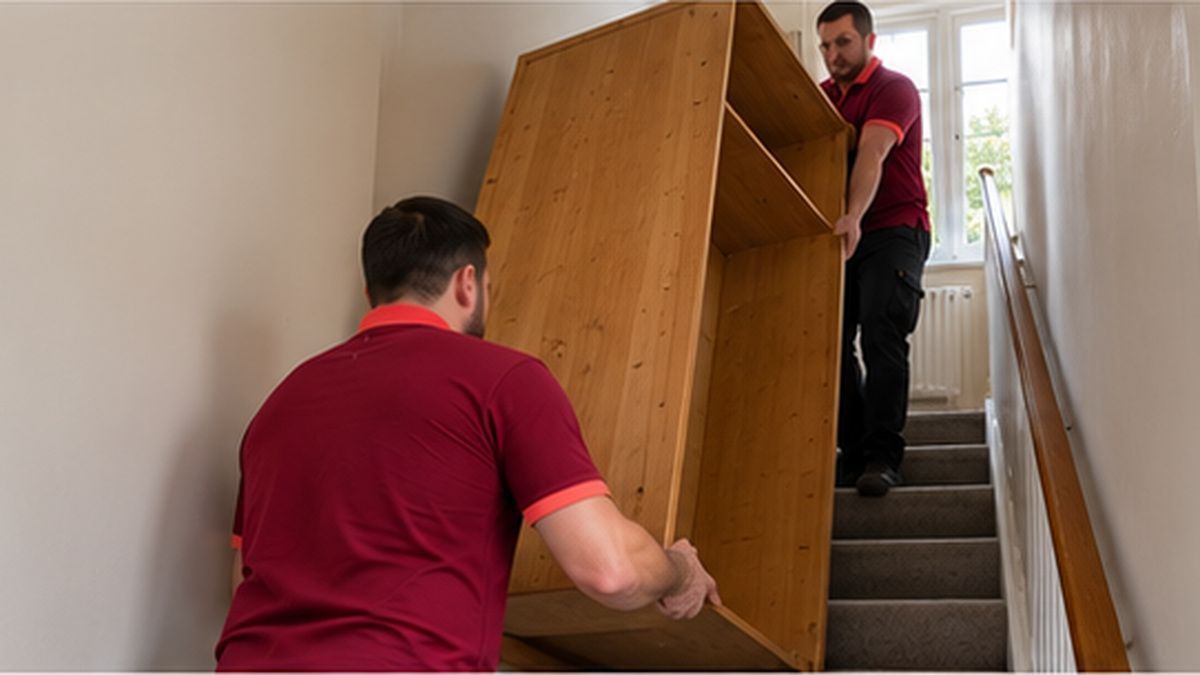
- Two people carry a wardrobe down stairs, the stronger one at the bottom taking the weight and the other steering from above.
- If it will not go round the turn, stop and have it taken apart or collected rather than forcing it past the banister.
Measure the stairs and the turn before anything else
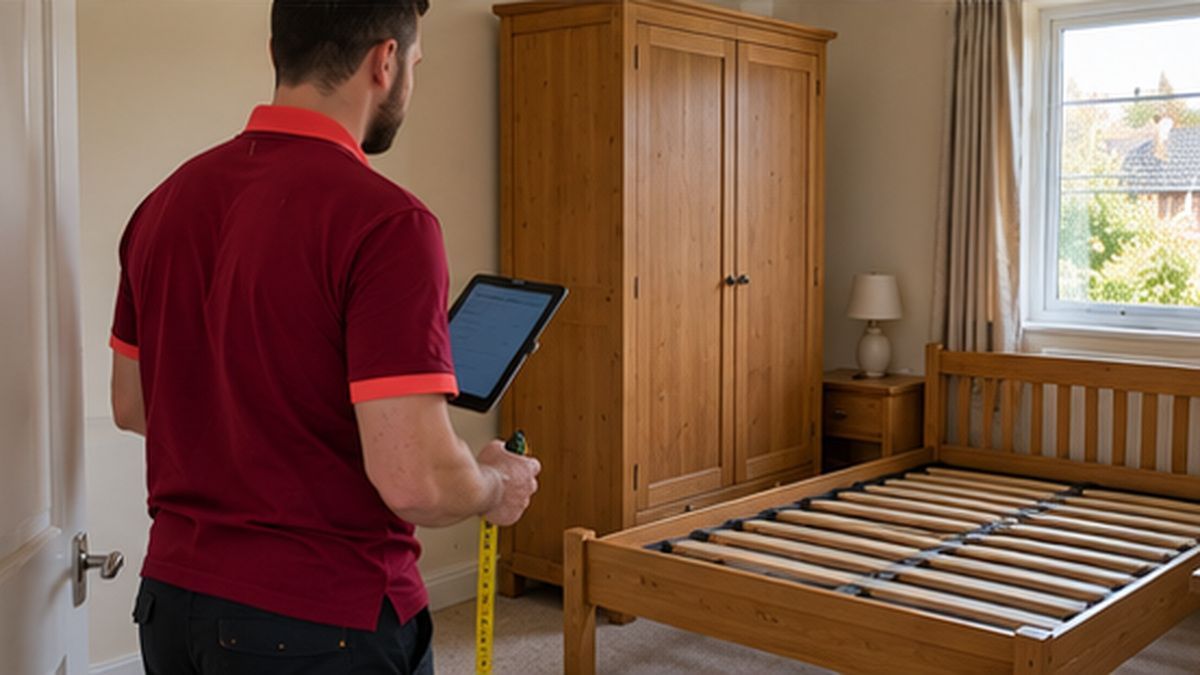
Most wardrobes that get stuck on the stairs were never measured against them. Start with the wardrobe itself: height, width and depth, written down. Then measure the staircase at its narrowest point, which is usually between the handrail and the wall rather than between the two walls. Measure the headroom under any bulkhead or sloping ceiling too, because a tall carcass tipped on its back needs more vertical space at the bottom step than you expect.
The turn is the part that catches people out. A straight flight with a square landing at the top gives you a lot of room to pivot. A dog-leg staircase with a half landing, or a winder where the treads fan round a corner, gives you very little. Stand on the landing and work out whether the wardrobe can be rotated on its end while it is still on the step above. If the diagonal of the carcass is longer than the space you have to turn it in, it will not go round in one piece and you can save yourself a bruised shoulder by deciding that now.
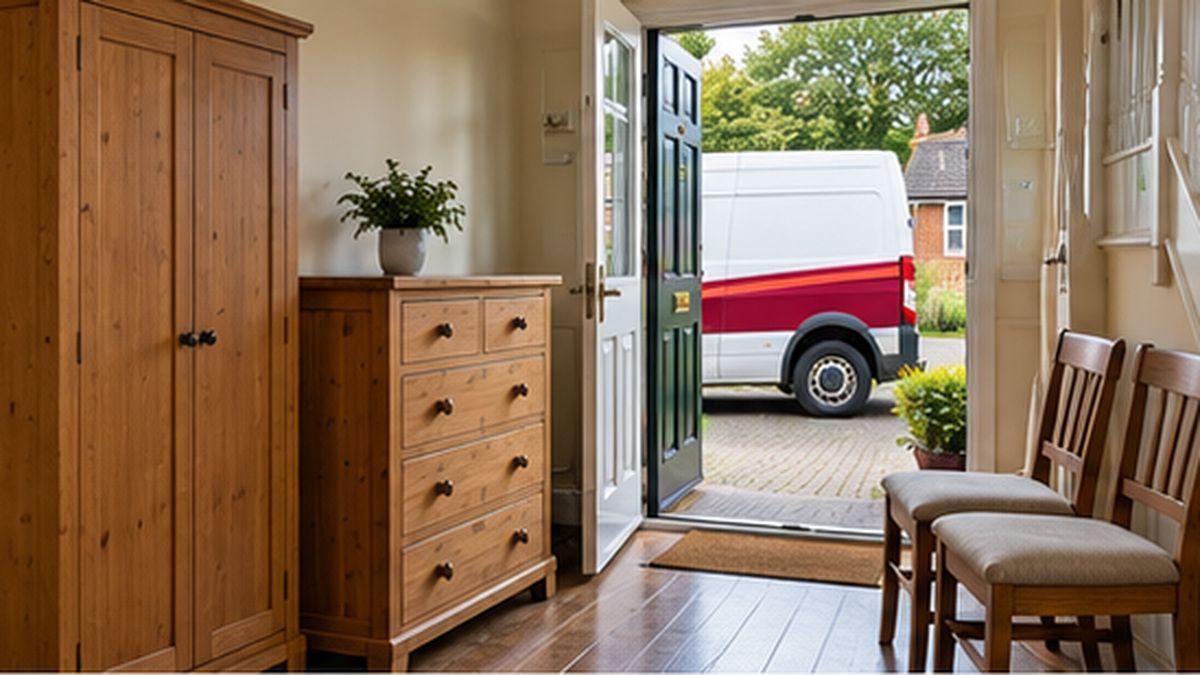
Check the route beyond the stairs as well. The hallway, the front door and any porch all have to take the same piece. Open the front door fully and measure the clear opening. A wardrobe that comes down the stairs and then jams in the porch is no further forward than one that stayed in the bedroom. Our wardrobe removal page describes how our crew handles these routes if you decide not to do it yourself.
Empty it and strip it down
Take everything out, including the hanging rail if it lifts free, and any drawers or internal baskets. Clothes and shoes add weight, but they also shift as the wardrobe tips, which throws the balance just when you need it to be steady. Check the top of the wardrobe for boxes that have been forgotten for years, and check behind it for anything that fell down the back.
Then take the doors off. On a hinged wardrobe this means unscrewing the hinges from the carcass side rather than the door side, so the door comes away with its hinges still attached and goes back on later if it needs to. Sliding doors lift up and out of the bottom track once any stops at the top are removed, and mirrored sliding doors are heavy and fragile, so have a second person ready to take each one as it comes free. Carry the doors down separately and lean them against a wall out of the way.
Loose shelves lift out. Fixed shelves are usually held by cam locks or wooden dowels and are better left in, because they brace the carcass and stop it twisting on the stairs. Tape the empty hinge plates and any sharp fittings with masking tape so they do not score the wallpaper on the way down.
Rather not carry it down yourself?
Send a photo of the wardrobe, say which floor it is on and whether the stairs turn, and we reply with one fixed price for taking it apart, carrying it down and disposing of it.
Flat-pack or solid: do you take the carcass apart?
A flat-pack wardrobe is built from chipboard panels joined with cam locks, dowels and a few screws. It came up the stairs in boxes and the quickest way down is the same way. Lay it on its back on an old sheet, undo the back panel first if it is nailed or screwed on, then release the cam locks with a screwdriver and lift the sides away. Keep the fittings in a bag if the wardrobe is going to be reused. Chipboard does not like being dismantled twice, so if it has already been moved once expect some of the dowel holes to have gone soft.
A solid timber or veneered wardrobe is a different thing. The joints are glued and the carcass is often one rigid piece, so it cannot be taken apart without damage. These are carried whole with the doors off, and the weight is the problem rather than the size. Some older wardrobes split into a top cornice, a carcass and a plinth, each held by a few screws underneath or inside. Look for those screws before you decide it has to go down in one.
Fitted wardrobes are a third case. They are screwed to the wall and often to the ceiling and floor, with the carcasses sharing panels between them. They have to be unscrewed from the building and then cut or broken down into panels that fit through the door. That is a job for tools and a tolerance for mess, which is why many people hand it over at this point.
Two people, and where each one stands
Never take a wardrobe down the stairs alone. Two people is the minimum and the right number, because a third person tends to get in the way on a staircase. The stronger of the two goes to the bottom, facing up the stairs, and takes the weight as the wardrobe tips towards them. The person at the top steers, keeps the carcass clear of the ceiling and calls out each step. Agree before you start that the person at the bottom is in charge of the pace.
Tip the wardrobe onto its back on the landing so the top edge points down the stairs. Both people hold the carcass rather than the doors or any trim, with hands under the edge rather than through an opening where fingers can be pinched against the wall. Move one step at a time and stop at the turn. At the turn, the bottom person lowers their end onto a step while the top person swings the wardrobe round the corner, keeping it above the handrail.
Wear shoes with grip and clear the stairs of anything you could stand on. If a strap or a sheet is being used to take some of the weight, test it on the landing first. A wardrobe that gets away from the person at the bottom does not stop until the hall.
Protecting the walls, the banister and the floor
Wardrobes score walls because their corners are hard and the staircase is narrow. Hang an old duvet or a moving blanket over the handrail and the newel post at the turn. Tape a sheet of cardboard to the wall at the height where the top corner of the wardrobe will pass. Remove any pictures from the stairwell and take down a light fitting that hangs low over the landing.
The banister is the most expensive thing to damage. Spindles crack if a carcass is levered against them, and a newel post that has been knocked loose is a real repair rather than a touch-up. If the wardrobe only fits by pressing on the banister, it does not fit. Put a blanket at the bottom of the stairs too, because the moment the wardrobe reaches the floor is when it is most likely to be dropped the last few inches.
Lift the wardrobe through the hall rather than dragging it. A chipboard base will scuff a wooden floor and a wooden plinth will tear a carpet. Two people carry it to the door, out to the drive and onto whatever is taking it away.
When to give up and have it taken apart or collected
Some wardrobes will not come down a staircase whole, and no amount of pushing changes that. If the measuring says it will not go round the turn, if it is a fitted run screwed to the walls, or if it is solid oak and you do not have two people who can lift it, the sensible move is to have it dismantled in the room and taken out in pieces. Breaking down a carcass with a saw in a bedroom is noisy and dusty, and the pieces still have to be carried down and disposed of afterwards.
That is the job our two-person crew does every day. You send a photo of the wardrobe and tell us which floor it is on and whether the staircase turns, and the fixed price we send back covers taking it apart, carrying it down, loading it and disposing of it. Same-day or next-day collection is offered wherever we can fit it in. Once it is on the van, you pay, and the room is clear.
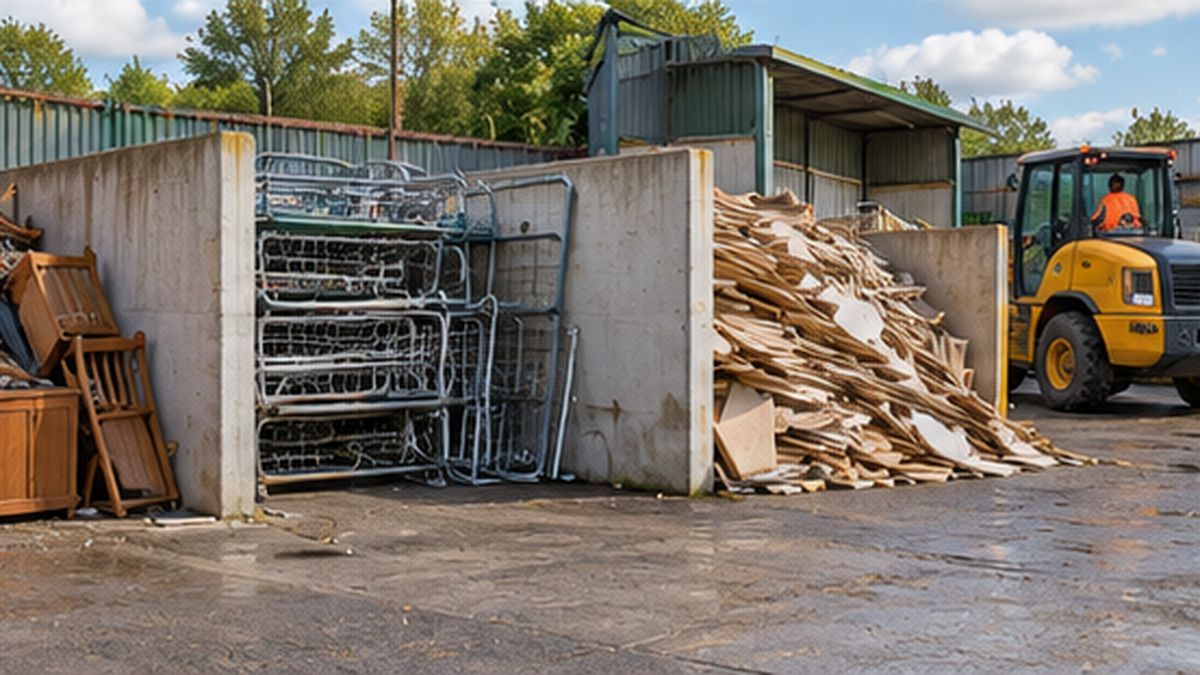
If you are weighing up what to do with the wardrobe afterwards, how to get rid of old furniture covers every route, and what happens to your furniture after collection explains where the chipboard and the solid timber end up once it leaves the house.
Questions people ask
Can one person get a wardrobe down the stairs?
Not safely. Even an empty flat-pack wardrobe is tall enough to tip and heavy enough to hurt someone on a staircase. Two people, one below taking the weight and one above steering, is the minimum.
Is it quicker to take a wardrobe apart or carry it whole?
For a flat-pack wardrobe, taking it apart is usually quicker and far safer, because the panels go down the stairs one at a time. A solid timber wardrobe cannot be dismantled without damage, so it is carried whole with the doors removed.
Do you take fitted wardrobes down the stairs?
Yes. Fitted wardrobes are unscrewed from the wall, broken down into panels in the room and carried out. Send a photo showing the full run and the staircase and we price for the whole job.
What if the wardrobe will not fit round the turn in my stairs?
Stop before anything is damaged. A wardrobe that cannot pivot on the landing has to come apart, which means unscrewing a flat-pack carcass or cutting down a solid one. Our crew does either in the room and carries the pieces down.
Want the wardrobe gone?
Fill in the form and we reply with a fixed price for taking the wardrobe apart if needed, carrying it down and disposing of it. Then send us a photo so the price is right first time.
- Registered waste carrier
- Fixed price from a photo
- Two-person crew and van
- Same or next day where possible

Get a fixed price from a photo
Fill this in and we reply by email with a fixed price. Then send us a photo of the furniture so the price is right first time.
Sent.
No email app on this device? Send the photo to hello@furniture-removal.co.uk with your postcode.